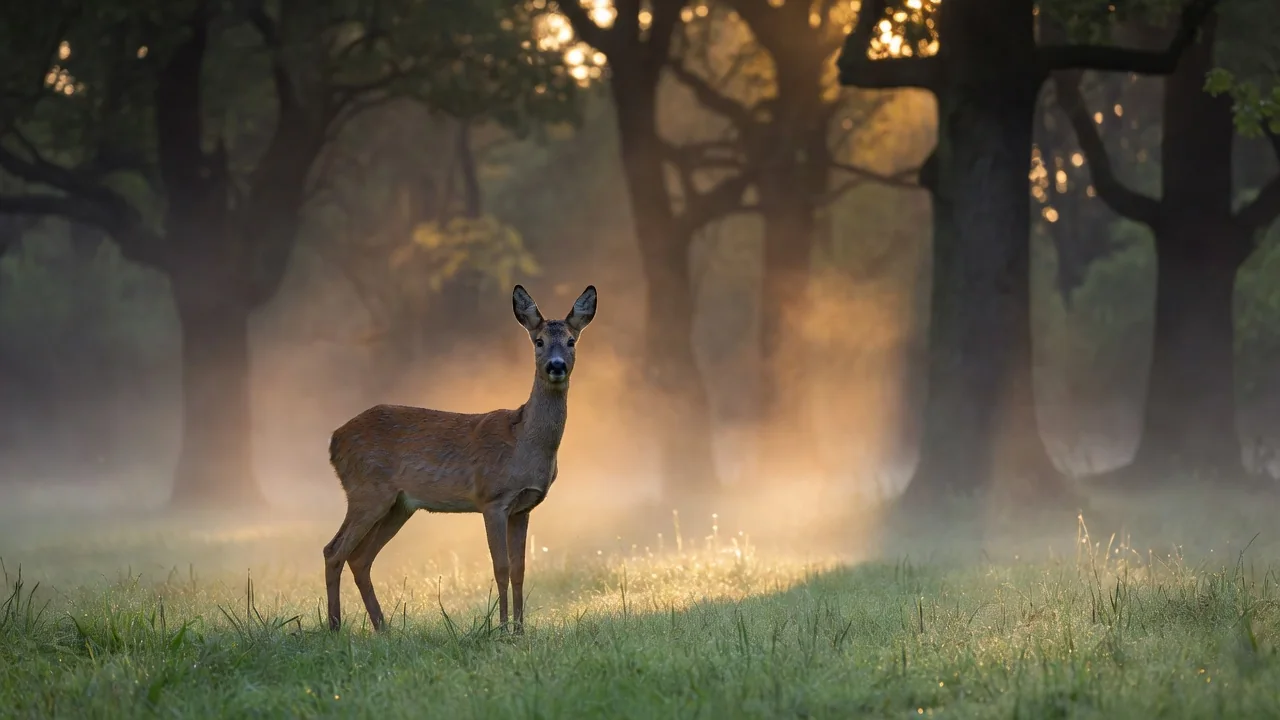
How to Find Owls in Daytime: Roosts, Pellets and Mobbing Crows
Spotting owls during daylight hours demands quiet patience and sharp eyes rather than luck. In mature woodlands across the northeastern United States and parts of Europe, long-eared owls often cluster in dense stands of Norway spruce or eastern hemlock during winter, sometimes with 12 to 20 birds sharing a single roost tree.
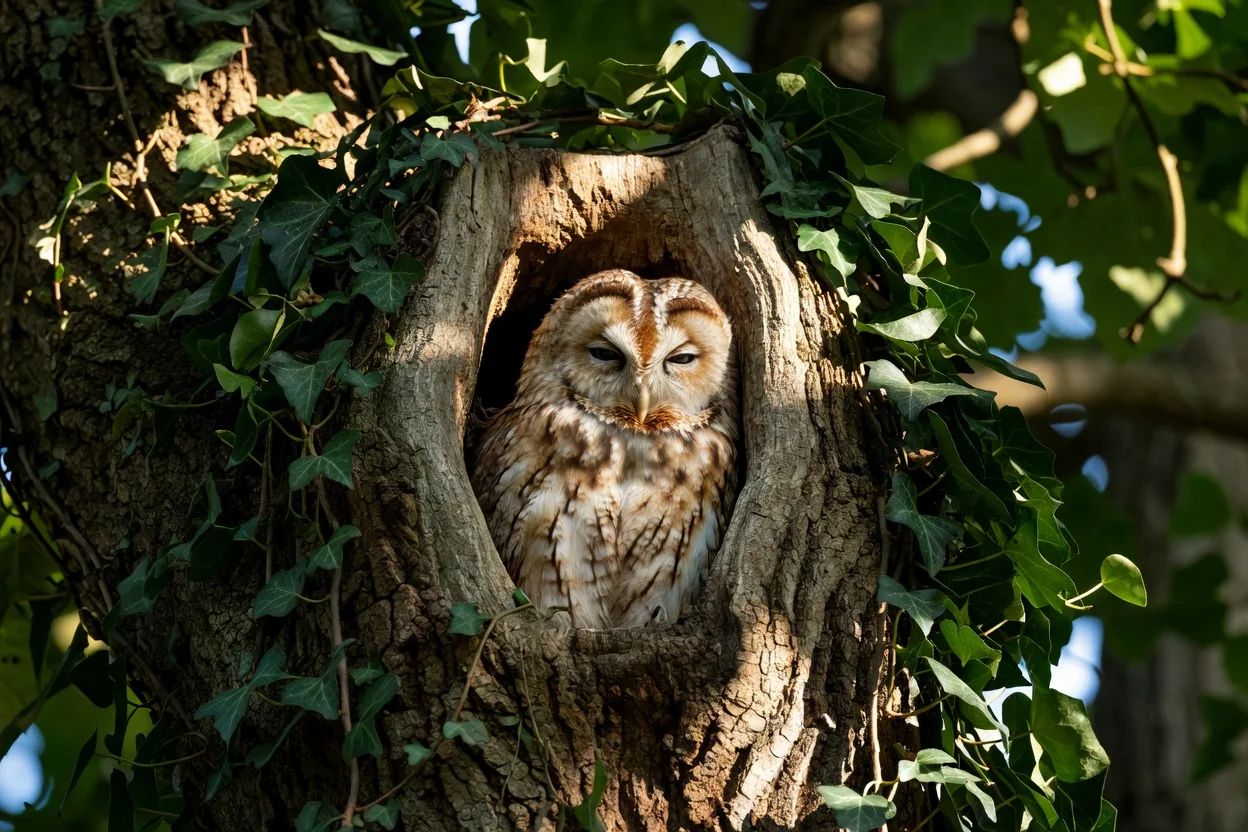
Look for accumulations of whitewash streaking down the trunk from 4 to 12 metres up; these uric acid splashes stand out against dark bark even at 40 metres. Great horned owls prefer the security of old American crow nests or red-tailed hawk platforms 15 metres high in deciduous canopy, while tawny owls tuck into natural cavities in ancient oaks only 3 to 8 metres above ground. The key is recognising these subtle signs without ever approaching closer than 30 metres.
Mobbing behaviour remains the most reliable daytime indicator across continents. When a murder of American crows or a gang of blue jays suddenly converges on one tree, screaming and diving, an owl is almost certainly hidden inside. Chickadees, nuthatches and kinglets join the fray, creating a noisy spectacle that can last 20 minutes. Ethical watchers maintain 30 to 50 metres distance, use only binoculars or a spotting scope, and depart after the owl has been observed once. Never play recorded calls more than twice in an hour and never broadcast exact GPS coordinates on social media. Responsible fieldcraft protects these birds from harassment year after year.
Reading Whitewash and Pellets Under Conifers
Whitewash is the most visible clue when searching for roosting owls. Long-eared owls and short-eared owls produce copious splashes of chalky uric acid that coat branches and trunks below favoured perches. Experienced roost hunters report that most winter long-eared owl roosts are found first by spotting these white streaks from forest trails at least 35 metres away. Search the ground directly beneath for regurgitated pellets composed of fur, bone and feather. Great horned owl pellets measure 5 to 8 centimetres long and contain rabbit skulls, while barn owl pellets are smaller, 3 to 4 centimetres, and packed with vole remains. Collect only photographs, never the pellets themselves.
Dense Evergreen Roosts of Long-Eared Owls in Winter
During December through February, long-eared owls gather in traditional communal roosts inside thick stands of eastern red cedar or Scots pine across the Midwest and northern Europe. A single 0.5-hectare grove may hold 15 birds spaced 4 to 6 metres apart along inner branches. Their cryptic plumage blends perfectly with the evergreen needles, but the constant rain of whitewash and pellets betrays their presence. Approach only along established paths, keeping at least 40 metres from the roost edge. The British Trust for Ornithology recommends leaving before any owl flushes twice to prevent energy-draining flights in sub-zero temperatures.
Great Horned Owls Using Old Crow Nests
Great horned owls rarely build their own nests, instead claiming abandoned American crow or common raven platforms 12 to 18 metres high in mature cottonwoods or white pines. Scan these bulky stick structures from 50 metres with a 20x spotting scope for the tell-tale ear tufts or the female’s rounded silhouette. In late winter the male often perches on a nearby limb 10 metres away, hooting softly at dusk. One pair in Minnesota’s Itasca State Park reused the same nest platform for seven consecutive seasons. Never climb or shake trees to confirm occupancy.
Tawny Owls in Tree Holes and Mobbing Songbirds
Tawny owls in European broadleaf forests occupy natural holes in veteran beech and oak trees only 4 to 7 metres above ground. Their presence is often first revealed by mobbing parties of blackbirds, robins and great tits that scold from surrounding branches. In a single 45-minute observation near the New Forest, 23 individual songbirds joined the chorus before the tawny owl finally flew 80 metres to another roost. Maintain strict 30-metre distance and avoid eye contact that might flush the bird. Record only mental notes or distant photographs.
Dusk Listening and Winter Irruptions of Snowy Owls
At dusk, stand quietly 60 metres from suspected roost areas and listen for territorial calls. Great horned owls deliver deep five-note hoots every 8 to 12 seconds while long-eared owls produce a single low hoot repeated every 2 seconds. During irruption years, snowy owls appear on coastal dunes and open grasslands from Quebec to New Jersey, often perching on driftwood or low fence posts. In the record 2013-2014 invasion, the research project SNOWstorm fitted transmitters to owls wintering far south of their normal range. Keep 50 metres away and never approach for closer views.
- Always scan from established trails or roads at least 30 metres from potential roost trees.
- Look for whitewash streaks and pellets on the ground before raising binoculars to the canopy.
- Interpret sudden crow and jay gatherings as likely indicators of a hidden owl.
- Leave the area immediately after the owl has been observed once to avoid repeated flushing.
- Never share precise coordinates of active roosts on social media or birding apps.
- Limit playback of recorded calls to two short bursts separated by at least 30 minutes.
| Species | Typical Roost | Best Season | Field Clue |
|---|---|---|---|
| Long-eared Owl | Dense conifers | Winter | Whitewash streaks |
| Great Horned Owl | Old crow nests | Year-round | Large pellets 7cm |
| Tawny Owl | Tree cavities | Autumn-Winter | Mobbing songbirds |
| Snowy Owl | Ground or low perch | Irruption winters | White shape on dune |
| Barn Owl | Barn rafters | Winter | Small black pellets |
Mastering these fieldcraft techniques turns every woodland walk into a quiet conversation with wild owls. Respect their space, keep your distance, and the birds will remain undisturbed for generations of watchers to enjoy.