Camera Traps at Home: A Beginner's Guide to Backyard Wildlife Monitoring
In the quiet hours after dusk, a trail camera tucked beside the compost bin in my Devon garden captured its first visitor: a European hedgehog snuffling along the fence line at 11:17 p.m. The footage showed every whisker in crisp 1080p detail, thanks to a no-glow infrared flash that left the animal completely undisturbed. Over 14 nights in early 2026 the same Bushnell Trophy Cam Essential recorded 47 separate triggers, revealing not just Erinaceus europaeus but also a pair of red foxes that passed within 2.4 metres of the lens. These affordable tools, now priced from £89 at major outdoor retailers, have turned thousands of back gardens and local woods into private wildlife observatories.
Setting up your first camera trap requires understanding the technology that makes it work. Most modern units rely on a passive infrared (PIR) motion sensor that detects the heat signature of a moving mammal against the cooler background. A trigger speed below 0.5 seconds is essential; anything slower and you will miss fast-moving species such as wood mice darting across leaf litter. Choosing a model with a no-glow infrared flash prevents the bright white burst that can spook skittish animals like badgers or roe deer. The decision between photo and video mode matters: still images use far less power and storage, while 30-second video clips deliver behaviour but drain batteries three times faster.
Choosing the Right Camera and Settings
Entry-level trail cameras from Browning and Spypoint now offer trigger speeds of 0.3 seconds and 20-megapixel sensors for under £120. Set the PIR sensitivity to medium in gardens where cats and wind-blown branches are common; high sensitivity in deeper woodland where every detection counts. For 2026 models, enable the date-time stamp and moon-phase overlay so you can correlate activity with lunar cycles. Always format a fresh 32 GB SD card inside the camera before first use to avoid compatibility glitches.
Battery logistics become critical once frost arrives. Lithium AA cells maintain voltage down to minus 20 °C, delivering up to four months of service in southern England winters, whereas alkaline batteries fail after three hard frosts. Carry at least eight spares and label them with the installation date. In my local wood near Dartmoor, a set of four lithium cells powered a Reconyx HyperFire 2 for 127 days before the first low-battery warning appeared.
Strategic Placement Techniques
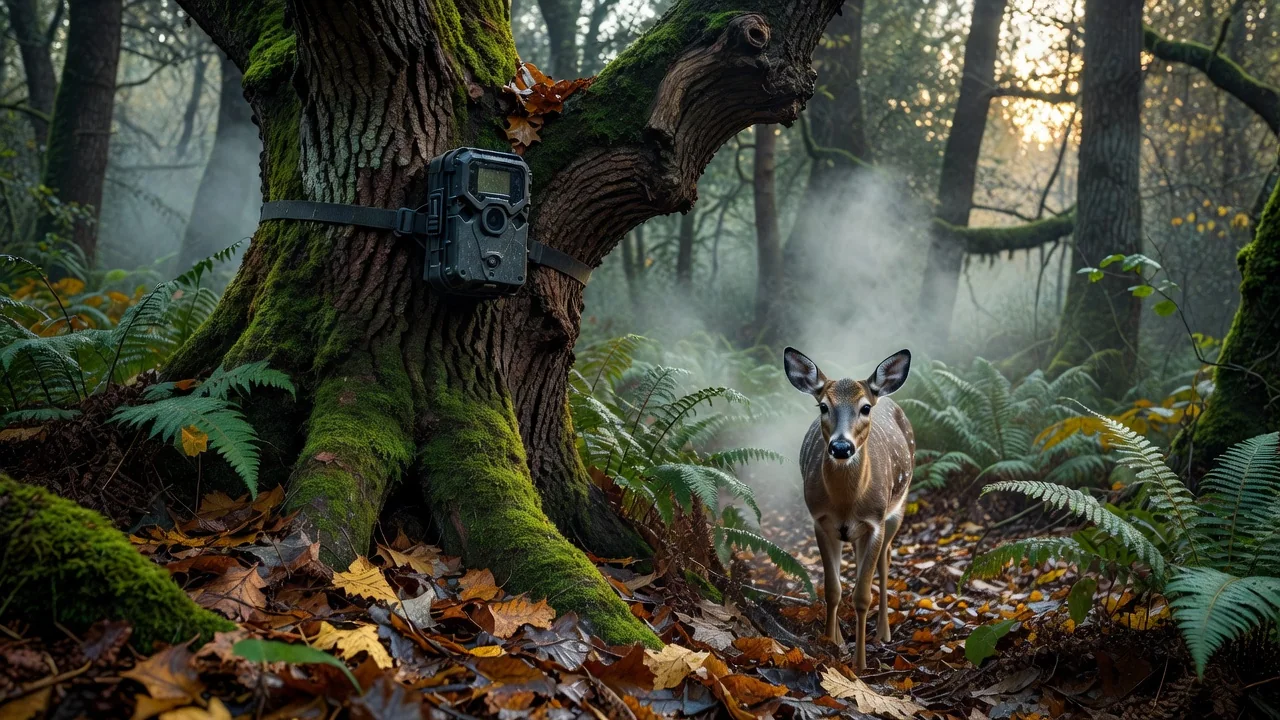
Look for existing animal trails, fence gaps, or natural funnels where wildlife must pass. Position the camera 30 to 50 cm above ground level to capture hedgehogs and foxes at eye height; higher placement favours deer and badgers. Angle the unit 15 degrees away from the rising sun to prevent lens flare and false triggers at dawn. Clear all waving grass and bramble within the PIR detection zone, which typically spans 15 metres by 12 metres on mid-range models.
Near water sources the success rate doubles. A camera placed 40 cm high beside my garden pond recorded 19 hedgehog drinking events and three fox visits in a single week in March 2026. In local woods, choose a sturdy oak or beech trunk and use a Python cable lock rated to 800 kg pull strength; cheaper straps fail within weeks to squirrels and curious teenagers.
Legal and Ethical Considerations
Deploy cameras only on your own land or with explicit written permission from the landowner. In the UK the Wildlife and Countryside Act 1981 protects certain species from disturbance, though simple observation with trail cameras is generally lawful. Never bait predators toward neighbouring properties where pets or poultry live; the risk of drawing a fox toward a chicken run next door is real and irresponsible. Respect neighbour privacy by ensuring the lens cannot view windows or gardens beyond your boundary.
Ethical monitoring means accepting that some images will show predation, roadkill, or disease. Record every deployment date, location in six-figure grid reference, and battery status in a simple notebook. Organisations such as the Mammal Society encourage citizen scientists to submit hedgehog and fox records through their online portal, turning backyard data into national conservation metrics.
What Wildlife to Expect
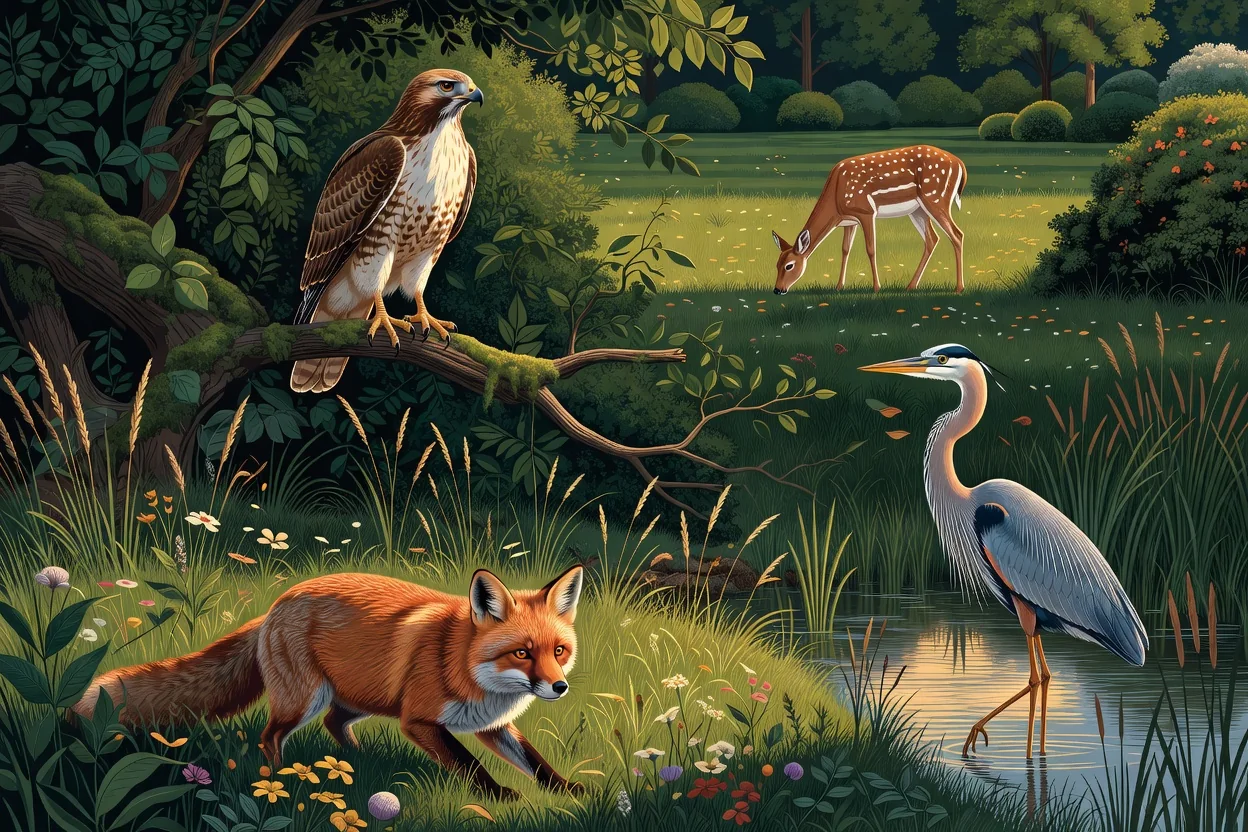
British back gardens regularly host hedgehogs, red foxes, wood mice, and occasionally roe deer. In suburban areas of the Midlands and South East, raccoons have established small populations after escapes from the pet trade; their distinctive hand-like prints appear beside ponds at night. The first nocturnal visitor always brings a rush of excitement, whether it is a badger’s striped face caught at 03:14 a.m. or a tawny owl perched on the camera housing itself.
Seasonal patterns are clear. Hedgehog activity peaks between April and October, dropping sharply once night-time temperatures fall below 8 °C. Foxes remain active year-round, with breeding season triggering increased movement in January and February. Set the camera to time-lapse mode between 4 a.m. and 6 a.m. during spring to catch badgers returning to setts with full bellies.
Common Problems and Quick Fixes
False triggers from swaying vegetation waste battery life and fill memory cards. Walk the detection zone at installation and trim every stem that moves in a breeze. Condensation inside the housing ruins electronics; tuck a small silica gel sachet behind the batteries and replace it every three months. When SD cards corrupt after 10 000 triggers, switch to industrial-grade cards rated for 85 °C operation.
- Always test the camera at home for 24 hours before field deployment to confirm settings and battery voltage.
- Check legal access and neighbour sightlines before fixing any unit to a tree or fence.
- Use lithium batteries in winter to maintain reliable function below freezing temperatures.
- Clear all vegetation within the PIR cone to reduce false triggers from wind.
- Review footage weekly and delete poor images to free space on the 32 GB card.
- Submit your best species records to the Mammal Society database each season.
| Species | Height (cm) | Trigger Speed | Best Mode |
|---|---|---|---|
| Hedgehog | 35 | 0.5s | Photo |
| Red Fox | 45 | 0.3s | Video |
| Wood Mouse | 25 | 0.2s | Photo |
| Roe Deer | 80 | 0.4s | Video |
| Badger | 40 | 0.3s | Photo |
Once you see that first sharp image of a hedgehog or fox caught in the no-glow beam, the quiet satisfaction of backyard monitoring becomes addictive. Every new species on the memory card reminds you how much wild life thrives just beyond the kitchen window.