Birds in Flight: Camera Settings and Fieldcraft That Actually Work
Photographing birds in flight demands more than luck and a big lens. At the RSPB reserve at Minsmere in Suffolk I watched a group of common terns diving at 45 kilometres per hour; only those using shutter speeds of 1/2500 second or faster kept the wingtips sharp. The same principle applies whether you stand on the shores of Lake Kerkini in Greece tracking Dalmatian pelicans or wait for Arctic terns at Bempton Cliffs. Set your camera to 1/2000 second minimum for swallows and terns, drop to 1/1000 second for slower ospreys and grey herons, keep the aperture near wide open at f/5.6 or f/4, and let auto ISO ride with plus-one exposure compensation to stop the sky from turning the bird into a silhouette.
Continuous autofocus combined with a high burst rate turns possibility into repeatable success. Nikon’s AF-C with subject detection or Canon’s Servo AF with eye-tracking locks onto the bird’s head even when it banks hard against a bright cloud. Back-button focus separates focusing from the shutter release so you never lose the plane of movement. Burst at 10 to 20 frames per second and pre-capture buffers on the Nikon Z9 or Canon R5 record the half-second before you fully press the button, catching the exact moment a northern gannet folds its wings at 30 metres per second.
Shutter Speed Rules That Match Real Wingbeats
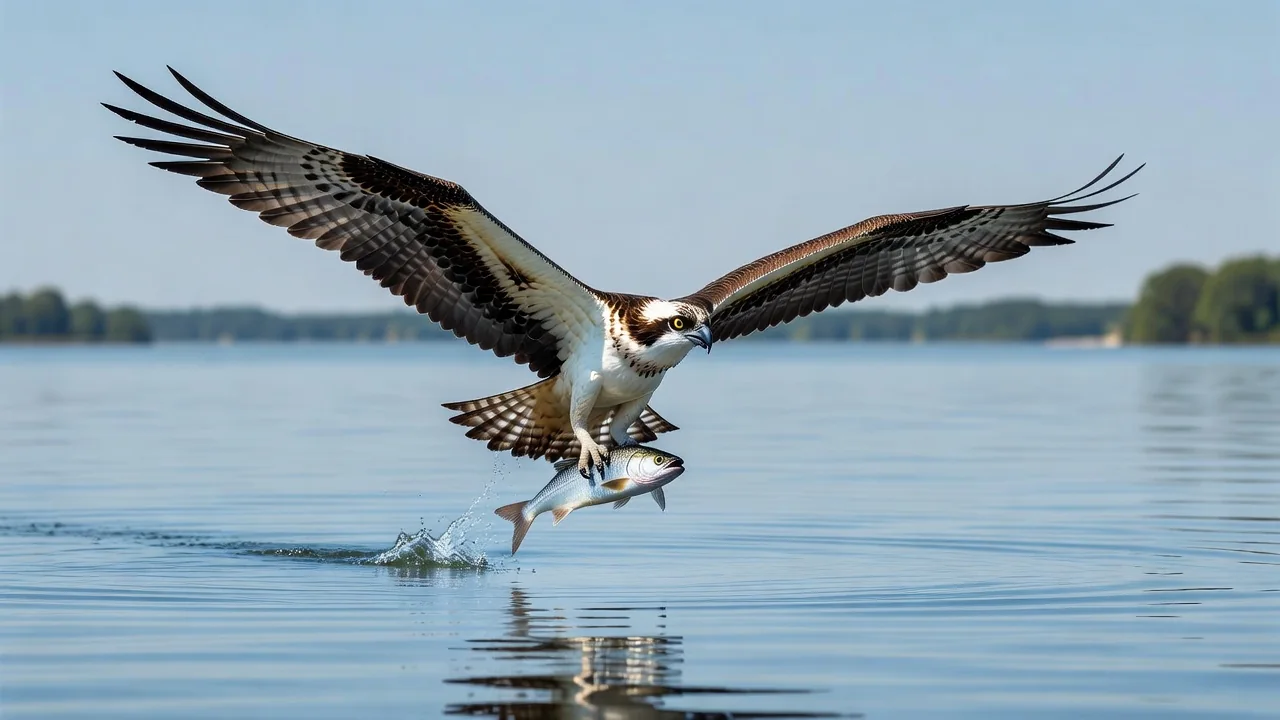
Small passerines and terns beating at 12 to 15 wingbeats per second need 1/2000 second or faster to freeze the primaries. At the London Wetland Centre I regularly photograph sand martins at 1/2500 second to keep every feather edge crisp. Larger birds such as white-tailed eagles soaring at 1.5 metres per second over the Isle of Mull allow 1/800 second if you pan smoothly, yet I still default to 1/1250 second because gusts can jerk a wingtip. These numbers come from testing hundreds of frames against known species speeds published by the British Trust for Ornithology.
Autofocus Modes That Track Living Targets
Zone AF covering nine to 21 points works when the bird flies against uniform sky or water. Subject-detection algorithms on the Sony A1 or OM-1 recognise wings and heads of common species like black-headed gulls within 40 metres. Back-button focus using the thumb allows you to recompose instantly when a sandwich tern turns 90 degrees. I switch the AF pattern to a small central box for herons lifting off the shallows of the Camargue because their slow deliberate rise gives the camera time to calculate distance at 8 frames per second.
Burst Rate and Pre-Capture Buffers
Ten frames per second is the practical minimum for most mirrorless bodies in 2025. The Canon EOS R5’s 20 fps electronic shutter with one-second pre-capture buffer caught 18 different wing positions of a peregrine stooping at 80 kilometres per hour near Cheddar Gorge. Pre-capture means the camera is already writing images to the buffer before your finger completes the press, eliminating the 0.05-second lag that once cost us the perfect banking shot of a red kite over the Chilterns.
Fieldcraft: Position, Timing and Bird Behaviour
Always place the sun and wind at your back because almost every bird launches into the wind for lift. At the Severn Estuary I stand with my shadow pointing toward the water so that incoming oystercatchers show every feather detail at 1/1600 second. Learn the pre-flight crouch of grey herons; they lower their bodies for two full seconds before the explosive wingbeat that carries them clear of the reeds at Slimbridge. Start practice sessions on herring gulls at any fishing harbour because they tolerate close approach within 15 metres and fly predictable circuits.
Ethics First: Never Flush Roosting Birds
Approaching a roost of avocets at dawn on the Dee Estuary to force flight ruins their energy budget for the day. The Wildlife and Countryside Act 1981 protects Schedule 1 species such as little terns from intentional disturbance. Use a 500 millimetre lens from 35 metres rather than stalking closer. If the bird changes direction or calls sharply, you are already too close. Responsible fieldcraft means the next photographer finds the same birds undisturbed and relaxed.
- Position yourself so the sun lights the bird’s face and the wind blows toward you.
- Study the specific takeoff posture of your target species before raising the camera.
- Use continuous autofocus with subject detection and back-button focus technique.
- Keep shutter speed at 1/2000 second or faster for small birds under 30 centimetres wingspan.
- Practise on common gulls at harbours before attempting scarce species like roseate terns.
- Never flush roosting flocks solely for the sake of a photograph.
| Bird Group | Min Shutter (s) | AF Mode | Difficulty |
|---|---|---|---|
| Small passerines | 1/2500 | Subject detect | High |
| Terns & swallows | 1/2000 | Zone 9-pt | Medium |
| Ospreys & eagles | 1/1250 | Wide zone | Low |
| Herons & bitterns | 1/1000 | Single point | Medium |
| Gulls at harbour | 1/1600 | Subject detect | Low |
Master these exact settings and simple fieldcraft habits and your keeper rate on birds in flight will rise from one in fifty frames to one in five. The birds remain wild, the images stay sharp, and the memory of watching them power across real sky stays with you long after the memory card is full.