The Wildlife-Friendly Garden: Native Plants, Water and the Courage to Be Untidy
In the heart of suburban yards and cramped balconies, a quiet revolution is underway. Entomologist Doug Tallamy’s core principle is simple yet powerful: native plants feed native insects, and those insects in turn sustain birds, bats, amphibians, and small mammals. A single mature oak tree can support over 500 species of caterpillars, while an exotic ginkgo supports almost none. By choosing coneflowers, milkweed, and other regional wildflowers, gardeners create the foundation for an entire food web. Last summer I watched a pair of American goldfinches strip seeds from a stand of purple coneflower just 10 feet from my back door, proof that even modest plots deliver results when planted with intention.
Turning a garden or balcony into functioning habitat requires three practical ingredients: the right plants, reliable water, and the courage to leave things a little untidy. Skip the pesticides entirely; even so-called “natural” sprays kill the very caterpillars that chickadees and wrens need to raise their young. Leave last year’s stems standing until late spring so solitary bees can overwinter inside hollow stalks. A shallow dish filled with pebbles and fresh water attracts everything from monarch butterflies to neighborhood hedgehogs. These small moves, repeated across thousands of yards, add up to meaningful corridors for declining wildlife populations.
Choosing the Right Native Plants
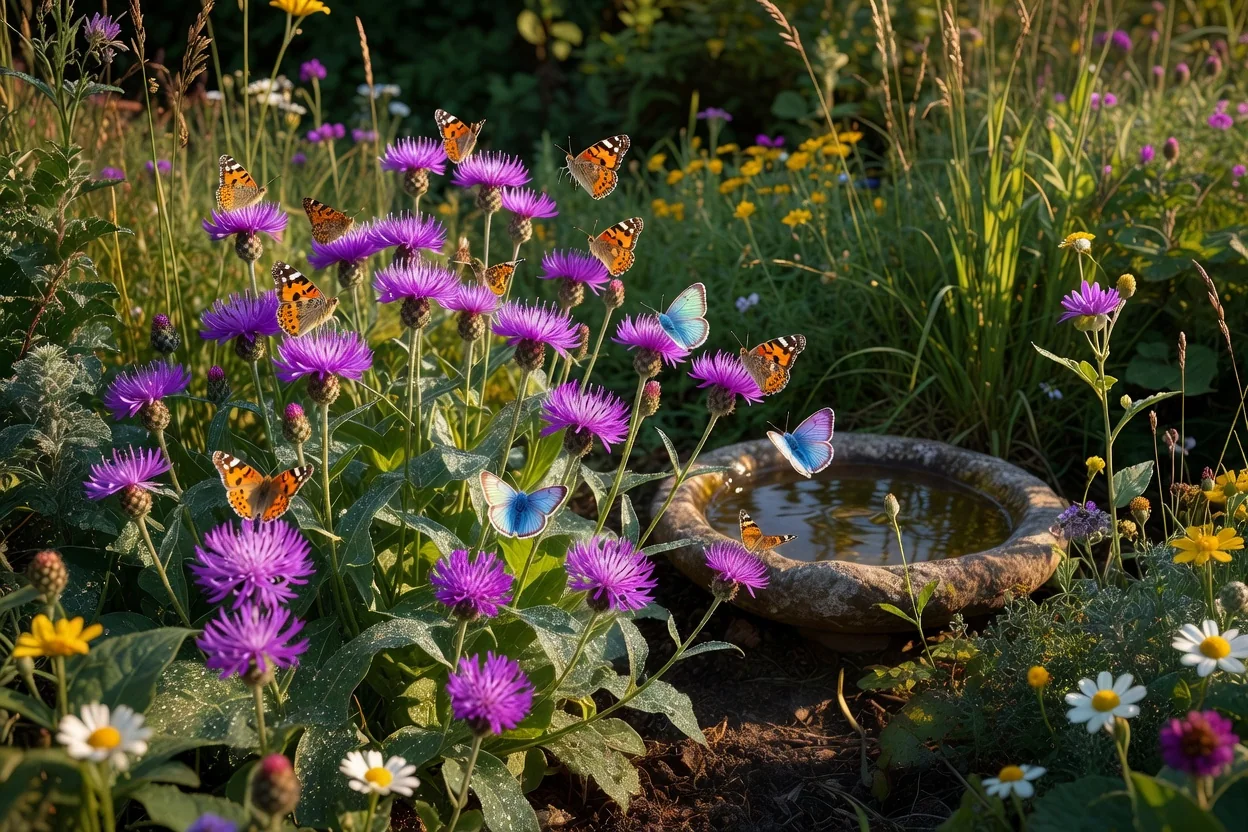
Doug Tallamy’s research at the University of Delaware shows that 90 percent of insect herbivores are specialists that evolved to eat only local plant species. In the eastern United States, planting common milkweed supports monarch butterflies whose numbers have dropped 80 percent in the past two decades. Black-eyed Susan and bee balm draw bumblebees and hummingbirds, while serviceberry shrubs feed 118 documented caterpillar species and later provide berries for cedar waxwings. Even on a 6-by-4-foot balcony, three large pots of native wildflowers can host enough insects to keep a family of house wrens busy all summer. The key is matching plants to your ecoregion rather than picking whatever looks pretty at the big-box store.
Water Sources That Work
A simple shallow dish 12 inches across with half-submerged stones gives butterflies and bees safe landing spots and prevents drowning. Change the water every two days to stop mosquito larvae from developing; I use a small solar fountain that moves the surface and keeps the water fresh for up to five days. In my own garden a 3-foot-wide pond edged with flat rocks draws eastern newts and green frogs within the first season. During July heat waves the dish is visited by 20 or more species before noon, including tiger swallowtails that drink for minutes at a time. Water is often the missing piece that turns a flower border into a true wildlife hub.
The Power of Leaving Things Untidy
Leaving a wild corner unmowed from May through October creates a refuge where ground-nesting bees and predatory beetles thrive. Standing stems of Joe-Pye weed and ironweed provide nesting tunnels for leafcutter bees that emerge the following spring. A brush pile just 4 feet wide and 2 feet high gives cover to Carolina wrens and overwintering lady beetles; I built one last year and found three species of native bees using it by March. Hedgehogs and toads also shelter beneath the tangle, emerging at dusk to hunt slugs. The aesthetic may look messy to some neighbors, yet it supports far more biodiversity than a chemically treated lawn.
Lighting Choices That Protect Nocturnal Life
Moths and other night-flying insects are drawn to bright white bulbs, often circling until they exhaust themselves or become easy prey. Switching to warm 2700K LEDs pointed downward cuts moth fatalities sharply, according to lighting studies. Bats lose foraging opportunities when prey is concentrated around porch lights; I installed motion-sensor fixtures that stay off 95 percent of the night and immediately noticed more bats hawking insects above the garden at twilight. On balconies, a single shielded sconce aimed at the floor preserves the natural flight paths that connect fragmented habitats after dark.
What to Expect in Year One Versus Year Three
Year one is mostly about establishment. Expect scattered monarch eggs on milkweed by midsummer and perhaps a single pair of nesting song sparrows. Insect numbers will still be modest because many species need time to locate the new resources. By year three the same garden typically hosts three or four species of breeding birds, regular visits from five or more kinds of butterflies, and visible hunting by dragonflies and bats. Native plant roots reach deeper, supporting richer soil life, while the brush pile and standing stems become permanent apartment blocks for beneficial insects. Patience is the only difficult part; nature responds once the habitat stays consistent.
- Plant at least 70 percent native species to support local food webs.
- Provide shallow water with landing stones and change it every two days.
- Leave last season’s stems standing until mid-May for overwintering bees.
- Build a small brush pile in a quiet corner for wrens and hedgehogs.
- Eliminate all synthetic pesticides and herbicides from the property.
- Use warm, downward-facing lights or motion sensors at night.
| Plant or Feature | Wildlife Supported | Effort Level |
|---|---|---|
| Common milkweed | Monarch caterpillars, bees | Low |
| Purple coneflower | Goldfinches, butterflies | Low |
| Shallow water dish | Birds, insects, frogs | Medium |
| Brush pile | Wrens, toads, hedgehogs | Low |
| Unmowed corner | Ground bees, beetles | Very low |
| Warm LED lights | Moths, bats (indirectly) | Low |
Start with whatever space you have, even if it is only a windowsill. The insects, birds, and small mammals already living nearby are waiting for the invitation only a thoughtful gardener can extend.