Stopping Bird Window Collisions: What Actually Works on Glass
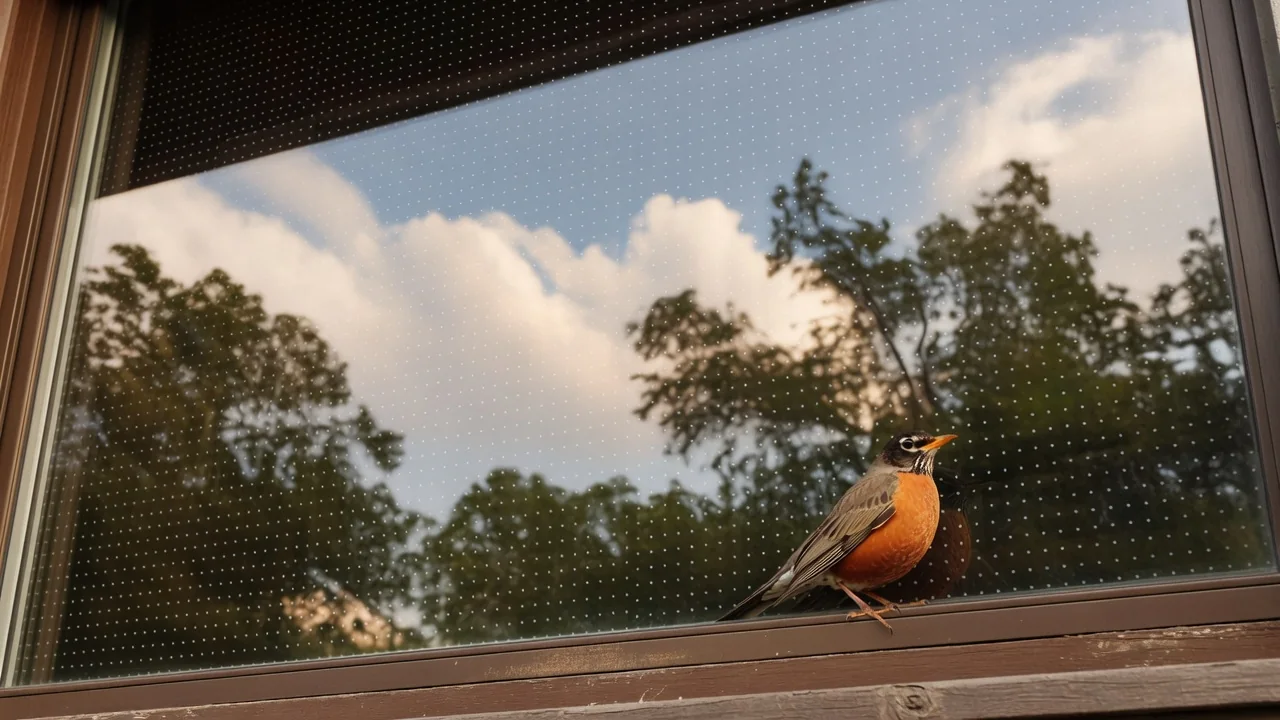
Birds slam into windows because the glass either mirrors sky and trees so perfectly that they cannot distinguish it from open air, or because they see plants on the far side and treat the transparent pane as a flight corridor. In North America the annual toll reaches roughly one billion birds, according to long-term studies compiled by the Smithsonian Migratory Bird Center and the Fatal Light Awareness Program. Single-family homes account for the majority of these deaths because they sit amid gardens and woodlands where birds forage and nest. During spring and fall migration the numbers spike, with warblers, thrushes, and vireos especially vulnerable at dawn when light angles create deceptive reflections.
Fortunately several proven solutions exist that reduce collisions by 80 to 95 percent when installed correctly. The key is interrupting the reflection or blocking the illusion of passage before the bird reaches glass speed. Techniques range from simple cord curtains to purpose-built glass patterns, all tested in peer-reviewed trials at buildings across Canada and the United States. Choosing the right fix depends on whether you own a historic home, a new-build, or a rental with limited modification rights.
Why the 2x4 Rule Matters
The most reliable external marking pattern follows the 2x4 rule: vertical lines no more than 5 cm apart and horizontal lines no more than 10 cm apart. Field tests by the American Bird Conservancy show this spacing stops the great majority of approaching birds because their eyes cannot resolve gaps larger than that at flight speed. Commercial films and tapes from companies such as CollidEscape or Window Alert follow this geometry and last five to seven years in full sun. Apply them to the outside surface; interior patterns lose effectiveness once the sun angle creates glare.
One continuous vertical stripe every 10 cm is almost as good for many species and looks cleaner on contemporary architecture. University researchers in Canada have documented drops of more than 90 percent in strikes after installing dark vinyl strips at 10 cm intervals. The contrast against sky or vegetation triggers an avoidance response even in low light.
Acopian BirdSavers and Hanging Cords
Acopian BirdSavers, often called “zen curtains,” consist of 3 mm nylon cords spaced 10 cm apart and hung from a simple wooden or metal rod 5 cm in front of the glass. The cords sway in the breeze, creating constant motion that birds notice from 3 to 4 metres away. Monitored installations at North American nature centres have gone from regular fatal collisions to none at all after the cords went up. The system costs about $12 per square metre and can be DIY-installed in an afternoon.
UV-Patterned and Fritted Glass for New Construction
New buildings can eliminate the problem at the design stage by specifying glass with permanent ultraviolet patterns or ceramic frit dots. The Max Planck Institute for Ornithology tested UV-reflective stripes that are invisible to humans yet create a visible grid for birds; collision rates fell by 85 percent. Fritted glass with 3 mm dots spaced 6 cm apart achieved similarly large reductions in Canadian trials. These solutions add roughly $35 to $65 per square metre but require no maintenance and preserve clear views from inside.
External Insect Screens and Feeder Placement
Ordinary black fiberglass insect screen mounted 5 cm in front of the window reduces strikes by 95 percent because it breaks up reflections and cushions any residual impact. The screen is nearly invisible from 2 metres inside. If you feed birds, move feeders either within 50 cm of the glass—so birds cannot gain lethal speed—or place them farther than 10 metres away so the window is outside their typical flight zone. Cornell Lab of Ornithology data from thousands of citizen-science reports confirm both distances sharply lower mortality.
What Does Not Work and First Aid Basics
A single hawk silhouette sticker or plastic owl provides almost zero protection; birds quickly habituate and fly around them. Interior blinds or curtains help only when fully closed, which is impractical during daylight hours. If you find a stunned bird, place it in a dark ventilated cardboard box lined with a soft cloth, keep it quiet and away from cats, and release it after one hour if it is alert and perching normally. If it shows wing droop, bleeding, or remains unconscious after two hours, contact a licensed wildlife rehabilitator immediately.
- External markings spaced 5 cm vertically and 10 cm horizontally reduce collisions by up to 95 percent when applied correctly.
- Acopian BirdSavers hanging 10 cm in front of glass have eliminated fatal strikes at monitored buildings.
- UV-patterned or fritted glass offers permanent protection for new builds and costs between $35 and $65 per square metre.
- Black insect screen mounted externally blocks reflections while allowing 80 percent light transmission.
- Feeders should sit within 50 cm of the window or beyond 10 metres to avoid the danger zone.
- A single hawk decal or indoor blinds left open provide negligible protection against window collisions.
| Fix | Cost per m² | Effectiveness | Inside View |
|---|---|---|---|
| 2x4 external tape | $8 | 90% | subtle grid |
| Acopian cords | $12 | 95% | minimal |
| Fritted glass | $55 | 92% | clear |
| Insect screen | $6 | 95% | slight mesh |
| Hawk sticker | $2 | 10% | obvious |
Protecting birds from windows is one of the simplest conservation actions any homeowner can take, and the right combination of spacing, contrast, and placement delivers near-total prevention without sacrificing light or views. Start with the largest unprotected pane you see reflected in the morning, apply an evidence-based fix, and watch the difference in a single migration season.