Wetlands: A Field Guide to the Richest Wildlife Habitat Near You
Wetlands cover only a small fraction of the United Kingdom’s land yet support a striking share of its breeding bird species and amphibians. A single fen like the RSPB’s Minsmere in Suffolk can host 300 bird species in a year while a nearby arable field might see 30. Open marshes, ponds, fens and flooded meadows act as giant nutrient traps where water meets land, producing biomass that feeds everything from midges to marsh harriers. The Ramsar Convention, signed in 1971, has now listed more than 2500 sites worldwide precisely because these small pockets deliver outsized wildlife returns.
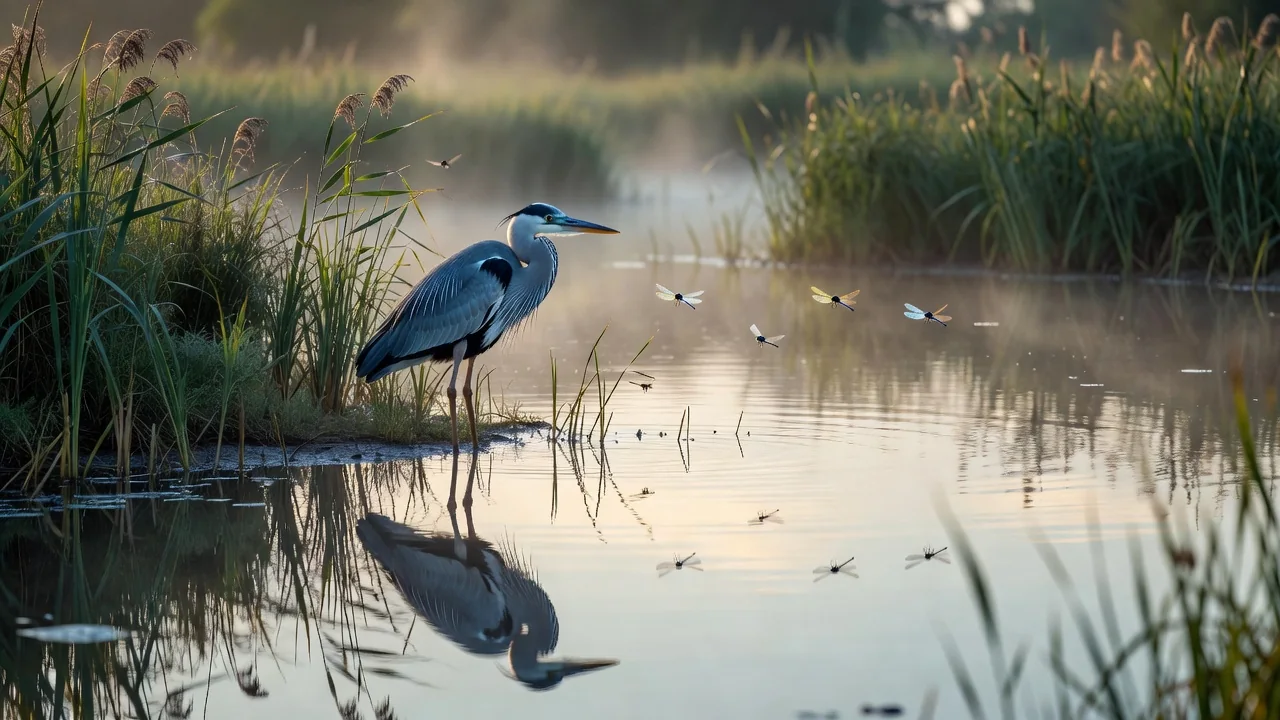
Beginners often stare at the middle of a pond and see nothing. The real action happens at the edges where stems meet water. Grey herons stand statue-still at dawn along the River Yare in Norfolk, striking at 8-inch roach. Great bitterns boom from reedbeds at Hickling Broad each April, their low calls carrying a mile across the fen. Marsh harriers quarter just three feet above the reeds at dawn and dusk, while four-spotted chaser dragonflies patrol from May onward. After summer rain the amphibian chorus of common frogs and smooth newts erupts along every ditch.
Why Wetlands Pack So Much Life
Shallow water creates a perfect overlap of aquatic and terrestrial food chains. Submerged plants like hornwort oxygenate the water while emergent reeds provide vertical structure for nesting. At Wicken Fen in Cambridgeshire, scientists have recorded 9000 invertebrate species within 250 hectares, a density unmatched by any woodland of similar size. The constant supply of water prevents the summer drought that limits life on drier soils, allowing three broods of reed warblers instead of the usual two found in hedgerows.
Reading the Seasons
Spring explodes first in the shallows. By mid-March, lapwings tumble over flooded meadows at Otmoor while bitterns begin their booming contests. April brings the peak amphibian chorus; on a warm wet night at Llangorse Lake the chorus of common toads carries across the water. May delivers the dragonfly hatch. Broad-bodied chasers emerge by the thousand at Strumpshaw Fen, their wings rattling like tiny helicopters above the water.
Summer shifts the focus to insects and their predators. Marsh harriers at Blacktoft Sands raise two or three chicks each on a diet of frogs and small birds. Kingfishers flash along the ditches at 25 miles per hour, diving for sticklebacks. By July the air above every wetland hums with 18 species of damselfly and dragonfly if you visit the right reserve.
Winter Wildfowl Spectacle
From October the wetlands fill again. Tens of thousands of wigeon and teal raft on the flooded Washes at Welney each January, their whistling calls audible from half a mile away. Whooper swans arrive from Iceland, gathering in their low thousands at reserves like Martin Mere, feeding on submerged celery and waste potatoes. The short days concentrate birds into sheltered bays where wind direction pushes them within range of well-placed hides.
Fieldcraft That Works
Stay low and face into the wind so your scent blows away from the birds. Hides at Penclacwydd allow views across 400 acres without disturbing a single teal. Boardwalks at Shapwick Heath keep feet dry and silent while letting you scan the reed edges rather than open water. Move only between scanning pauses of at least three minutes; bitterns detect movement faster than they detect color.
Arrive an hour before sunrise or an hour before sunset. At these times the light is low and birds are most active. A 10x42 binocular is ideal; anything heavier tires your arms during a four-hour watch. Record the wind direction and strength in a notebook because birds will always drift to the lee shore within 90 minutes of a wind shift.
Common Species by Quarter
- Spring brings booming bitterns, displaying great crested grebes, and returning swallow numbers that can exceed 5000 at a single reedbed site.
- Summer features hunting marsh harriers, emerging dragonflies, and reed warbler nests woven around stems exactly 60 centimetres above water level.
- Autumn sees passage waders such as wood sandpipers and the first arriving flocks of pink-footed geese that can number in the tens of thousands at Snettisham.
- Winter delivers huge rafts of wigeon and teal, whooper swans feeding at dawn, and short-eared owls quartering the marshes at dusk.
- Year-round residents include grey herons, kingfishers, and water rails that squeal from deep cover at any season.
| Season | Key Species | Best Time | Numbers |
|---|---|---|---|
| Spring | Bittern | Dawn | 1-3 booming males |
| Summer | Dragonflies | Midday | 18 species |
| Autumn | Waders | Tide out | Up to 2000 |
| Winter | Wigeon & Teal | Dusk | 40,000+ |
| All year | Grey Heron | Dawn | 1-12 |
Pick one wetland within 30 minutes of your home and visit it every two weeks. The same patch of reeds will reveal new secrets each trip, and within a year you will know its rhythms better than most weekend visitors ever do. That knowledge is the real gift wetlands offer anyone willing to stand quietly at the edge and watch.