Reading a Forest Layer by Layer: From Canopy to Rotting Log
In the ancient woodlands of the New Forest and the mixed deciduous stands of the Scottish Borders, a single oak tree can support over 2,300 invertebrate species while creating vertical neighborhoods stacked like apartments. A patient observer standing in one spot at dawn can tally dozens of bird species working different forest layers within earshot. Understanding these layers turns a casual walk into a precise inventory of who lives where and why. When you pause beneath a 120-year-old beech and look upward, the canopy 25 meters overhead is a separate ecosystem buzzing with life that never touches the ground.
From the rotting log at your boots to the swaying treetops, each stratum offers distinct microclimates, food sources, and protection. A mature forest in the UK might contain six to eight recognizable layers, each with specialists that rarely cross boundaries. Learning to read them helps you anticipate sightings, interpret tracks, and grasp why structural diversity matters far more than simple tree density for conservation success. The difference between a vibrant old-growth wood and a uniform plantation becomes obvious once you know what to measure.
Canopy: The Sunlit Penthouse
The uppermost canopy layer, often 20 to 35 meters high in UK broadleaf woods, hosts warblers, blue tits, coal tits, and treecreepers that glean insects from leaf clusters. Eurasian red squirrels build their dreys in the fork of large limbs, while honey buzzards return each summer to nest in the tallest beeches of the Chilterns. These birds and mammals exploit a world of swaying branches and constant wind that buffers them from ground predators. A single mature oak can produce 250,000 leaves annually, fueling this aerial food web.
Understory and Shrub Layer: Mid-Level bustle
Between 2 and 10 meters, the understory and shrub layer shelter song thrushes, nesting European robins, and blackcaps that weave nests in dense hawthorn and hazel. Browse lines on holly and rowan reveal where roe deer and fallow deer feed regularly, leaving clear horizontal marks 1.2 meters above ground. British Trust for Ornithology monitoring shows how essential this layer is as breeding-season cover for woodland passerines. Dense structure here also slows wind and creates moist pockets that amphibians use on damp nights.
Forest Floor: The Living Carpet
On the ground, leaf litter and soil host fire salamanders curled beneath logs in the wetter western oakwoods of Wales and hundreds of beetle species tunneling through decaying matter. Mycorrhizal fungi networks connect roots of neighboring trees, moving sugars and warnings across distances up to 40 meters. A square meter of healthy forest floor can contain 1,500 mites and springtails working the top 5 centimeters of organic material. These decomposers recycle nutrients that eventually reach the canopy again.
Deadwood: Habitat, Not Waste
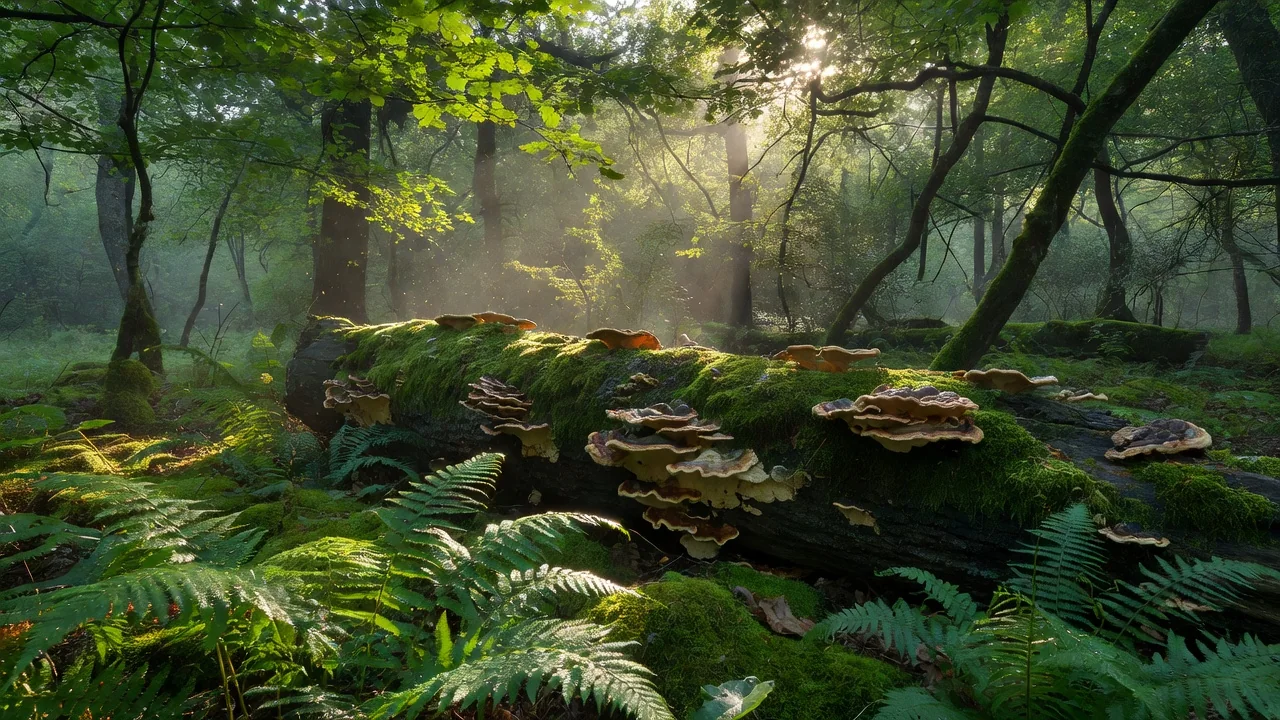
Dead and decaying wood supports more biodiversity than living trees in many systems. A single standing dead oak in the Blean Woods can develop woodpecker cavities that later house tawny owls, stock doves, and pine martens. Roughly one third of all forest species in Europe depend on deadwood at some life stage, including rare stag beetles that require rotting stumps at least 15 centimeters in diameter. Fallen logs create sheltered runways for bank voles and highways for fungi that fruit only on horizontal surfaces.
Fieldcraft That Reveals the Layers
Stand completely still for 15 minutes after entering a wood and the forest resets around you, with birds resuming normal activity within 8 meters. Follow mixed feeding flocks of long-tailed tits, goldcrests, and nuthatches in winter to move efficiently between layers without disturbing residents. Listen for sudden alarm calls that often announce a passing northern goshawk or red fox moving through the shrub layer. Move your eyes before your head when scanning upward to avoid alerting canopy species 20 meters above.
- Old-growth forests contain three times more standing deadwood than even-aged plantations.
- Structural complexity supports 40 percent higher bird diversity than monoculture stands of the same tree count.
- Plantations with added log piles and retained veterans can recover a large share of their original species richness within a decade or two.
- Vertical layering matters more for insectivores than total stems per hectare.
- Retaining 15 snags per hectare dramatically increases woodpecker breeding success.
- Diverse age classes create overlapping layers that buffer climate extremes.
| Layer | Typical Residents | Best Detection Clue |
|---|---|---|
| Canopy | warblers, honey buzzard | high-pitched contact calls |
| Understory | robins, thrushes, roe deer | browse lines at 1.2 m |
| Shrub | blackcap, dunnock | rustling at 2-4 m height |
| Forest floor | beetles, salamanders | turning logs reveals movement |
| Deadwood | woodpeckers, pine marten | fresh wood chips or scat |
Once you start seeing the forest in layers the whole experience changes, and every visit becomes a chance to sharpen your naturalist eye. The stacked habitats reveal themselves in calls, textures, and signs that reward patience far more than miles covered.